
A cross platform, customizable graphical frontend for launching emulators and managing your game collection.
A cross platform, customizable graphical frontend for launching emulators and managing your game collection.
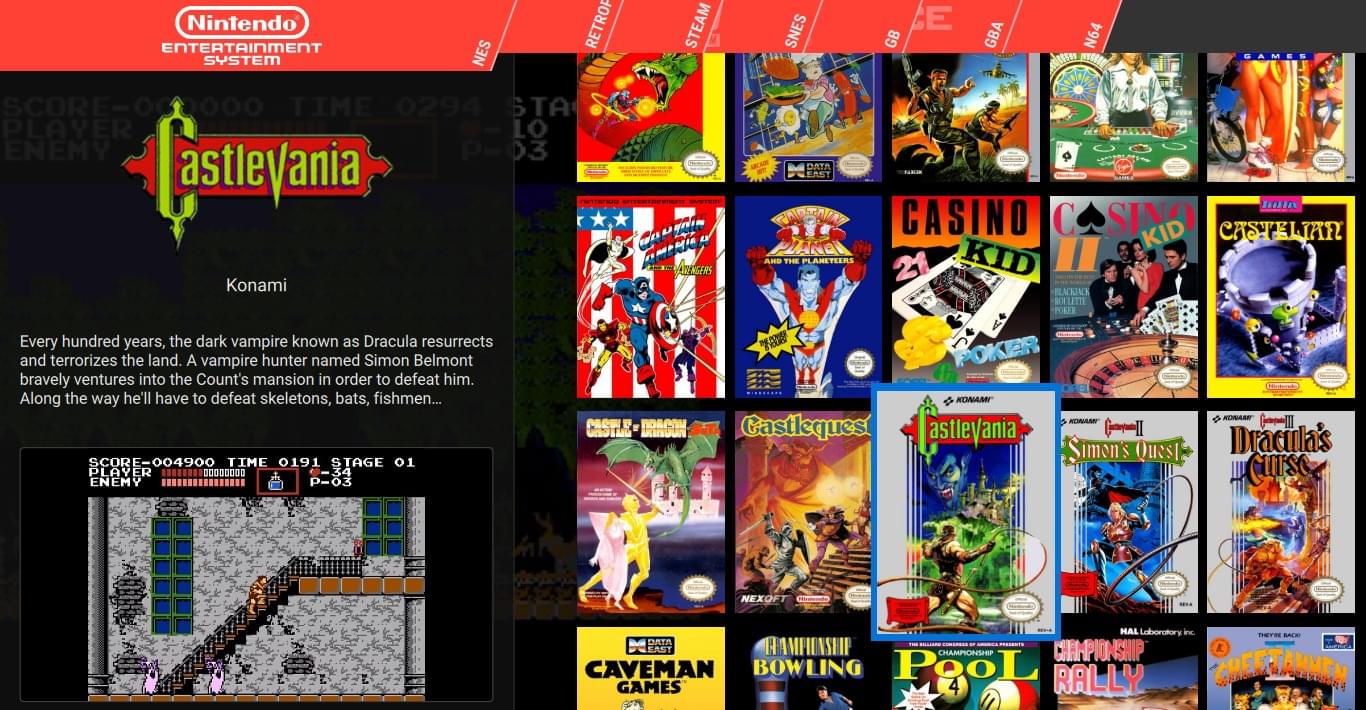
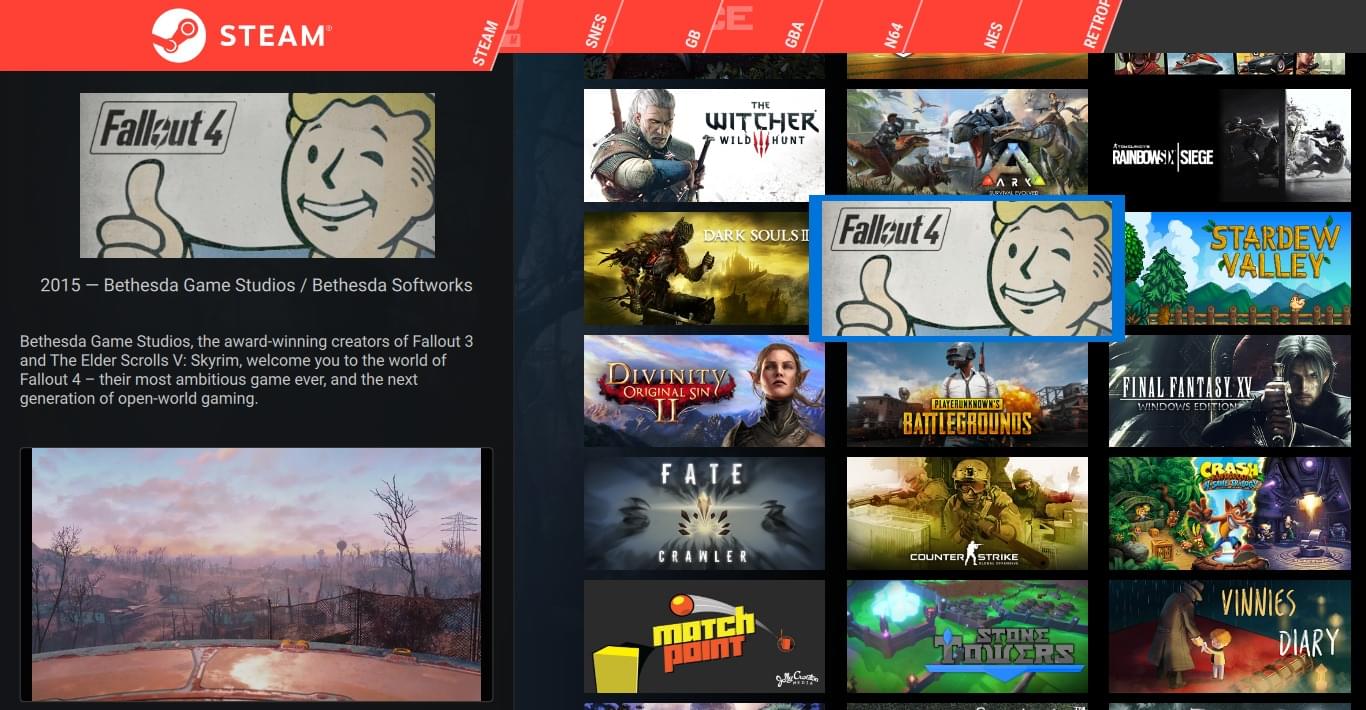
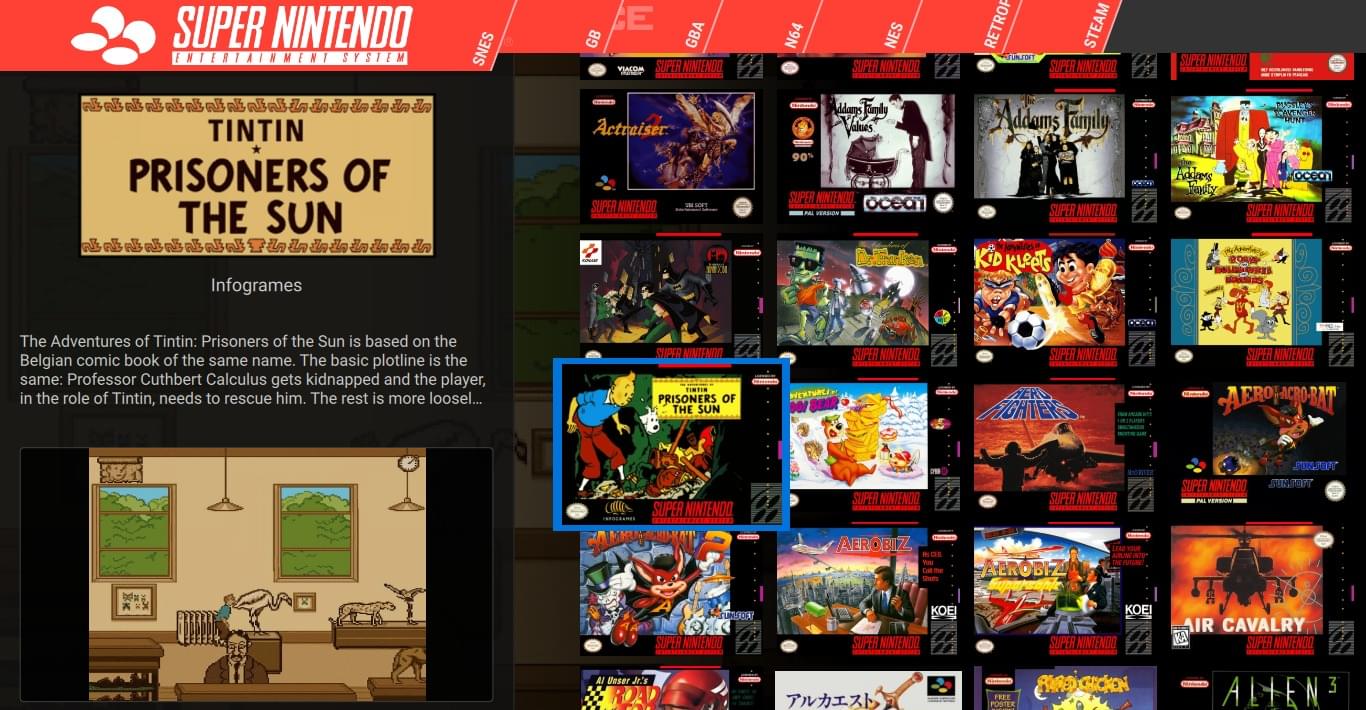
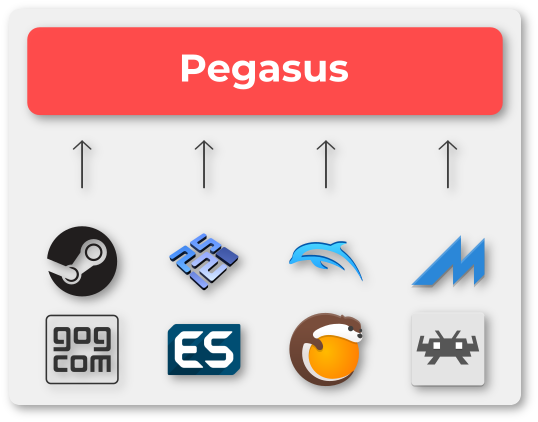
Pegasus is a graphical frontend for browsing your game library (especially retro games) and launching them from one place. It's focusing on customizability, cross platform support (including embedded devices) and high performance.
Instead of launching different games with different emulators one by one manually, you can add them to Pegasus and launch the games from a friendly graphical screen from your couch. You can add all kinds of artworks, metadata or video previews for each game to make it look even better!
With additional themes, you can completely change everything that is on the screen. Add or remove UI elements, menu screens, whatever. Want to make it look like Kodi? Steam? Any other launcher? No problem. You can add animations and effects, 3D scenes, or even run your custom shader code.
Pegasus can run on Linux, Windows, Mac, Raspberry Pi, Odroid and Android devices. It's compatible with EmulationStation metadata and gamelist files, and instantly recognizes your Steam games!

The architects of this world (the writers, the coders, the editors, the streamers) hold a sacred trust. And the audience—you—holds the ultimate remote control: your attention. Use it wisely.
Today, to study popular media is to study the human psyche. To produce entertainment content is to wield influence on a scale previously reserved for governments and religions. This article explores the vast ecosystem of modern entertainment—its history, its current mechanics, its psychological grip, and its future trajectory. Before the advent of mass production, entertainment was localized: folk tales, traveling minstrels, and community theater. The industrial revolution changed that. The penny press, the phonograph, and the nickelodeon introduced the concept of scalable joy . slayed+24+02+20+alina+lopez+and+ryan+reid+xxx+1
In the span of just one century, humanity has witnessed a radical transformation in how we tell stories, consume information, and define cultural value. From the crackling radio dramas of the 1920s to the algorithm-driven, infinite scroll of TikTok in the 2020s, entertainment content and popular media have evolved from passive pastimes into the primary architects of global consciousness. The architects of this world (the writers, the
Most creators generate content for free. The top 1% of YouTubers earn millions; the bottom 90% earn nothing. This has led to "passion economy burnout"—creators chasing algorithms instead of art. Today, to study popular media is to study the human psyche
The Golden Age of Hollywood (1930s–1950s) established the studio system, turning movie stars into deities. The rise of television in the 1950s and 1960s brought "the living room theater," creating shared national moments—the final episode of M A S H*, the moon landing, the Beatles on Ed Sullivan .


