Resistor ladder (R2R) DACs work differently. They use a network of precision resistors to directly assemble the voltage for every discrete step of the waveform. Think of it as the difference between tracing a stencil (Delta-Sigma) versus connecting dots by hand with exact coordinates (R2R). When executed well, R2R delivers superior linearity, transient response, and a timbre that feels "organic."
The most immediate difference is the bass. Delta-Sigma DACs often deliver tight, punchy bass. The R2R Play Opus delivers textured bass. On "Angel," the sub-bass rumble doesn't just hit the chest; it decays with a holographic thickness that feels physical, not synthesized. r2r play opus release
In this article, we dissect the Opus Release, exploring its technical genesis, its sonic signature, and why this specific update represents a watershed moment for digital music lovers. Before analyzing the "Opus Release," we must understand the canvas it paints on. Most modern DACs (Digital-to-Analog Converters) use Delta-Sigma modulation. They use a 1-bit stream and heavy filtering to reconstruct the analog waveform. While incredibly accurate in measurement, critics argue this process introduces "digital artifacts" and "glare." Resistor ladder (R2R) DACs work differently
In the high-stakes arena of personal audio, where silicon chipsets are refreshed annually and marketing jargon often outpaces audible gains, a quiet revolution has been brewing. For years, the digital-to-analog conversion landscape has been dominated by Delta-Sigma architectures—efficient, powerful, and ubiquitous. But a dedicated subset of audiophiles has always yearned for something else: the natural, linear warmth of R2R (Resistor Ladder) conversion. On "Angel," the sub-bass rumble doesn't just hit
Historically, R2R DACs could sound "veiled" in the treble if the resistors weren't precise enough. The Opus Release shatters that stereotype. The cymbal crashes on "Lose Yourself to Dance" are airy and extended, but lack the metallic, "spraying" sound of lower-end Delta-Sigma. The slow roll-off filter preserves harmonics without adding artificial sparkle. The User Experience and Connectivity The Opus Release isn't just about sound; it's about utility. The new firmware dramatically reduces lock time (the delay when switching sample rates). Previously, R2R Play took nearly 1.5 seconds to switch from 44.1kHz to 192kHz. The Opus Release reduces this to 0.3 seconds via a new PLL (Phase-Locked Loop) algorithm.

Forgot your password? Ask for
login recovery
Start each service with 30 days for free.
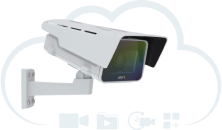
CamStreamer Clouds allows you to use special features such as Remote Access for management connected Axis cameras, TimeLapse, or Cloud Recordings. It also allows you to use our CamStreamer streaming apps as a service on a monthly payment basis. CamStreamer Cloud is not for managing all your perpetual licenses. Still, if you already have perpetual licenses, you can access them via cloud Remote Access if this service is active on specific cameras.
Learn more about CamStreamer Cloud Solutions