The "school girl moaning" viral video serves as a case study for the complexities of viral content on social media. While viral videos can bring people together and create a sense of shared culture, they also raise concerns about exploitation, cyberbullying, and mental health. As social media continues to evolve, it's essential to consider the impact of our online actions and to prioritize empathy, kindness, and respect for others.
The "school girl moaning" viral video has sparked a heated debate on social media, with many users expressing concern for the girl's well-being and others criticizing the video as insensitive or exploitative. Some have called for the video to be taken down, citing concerns about the girl's privacy and potential bullying. Others have defended the video, arguing that it's a harmless prank or a legitimate expression of the girl's emotions. The "school girl moaning" viral video serves as
In today's digital age, social media has become an integral part of our lives. Platforms like Twitter, Instagram, and TikTok have given rise to a new era of content creators, influencers, and viral sensations. One such phenomenon that has taken the internet by storm is the "school girl moaning" viral video. In this article, we'll delve into the world of viral videos, explore the context surrounding this particular clip, and examine the social media discussion that has ensued. The "school girl moaning" viral video has sparked
The "school girl moaning" viral video refers to a short clip that surfaced on social media platforms, allegedly featuring a high school student exhibiting unusual behavior in a classroom setting. The video shows the student, who appears to be a teenager, moaning loudly and seemingly in distress. The clip has sparked intense debate, with many viewers expressing concern for the girl's well-being, while others have criticized the video as a prank or an attention-seeking stunt. In today's digital age, social media has become
Viral videos have become a staple of social media culture. With the proliferation of smartphones and high-speed internet, it's easier than ever for users to create, share, and consume video content. Platforms like YouTube, TikTok, and Twitter have algorithms in place that favor content that generates high engagement, such as likes, comments, and shares. This has created an environment where viral videos can spread like wildfire, captivating the attention of millions of users worldwide.
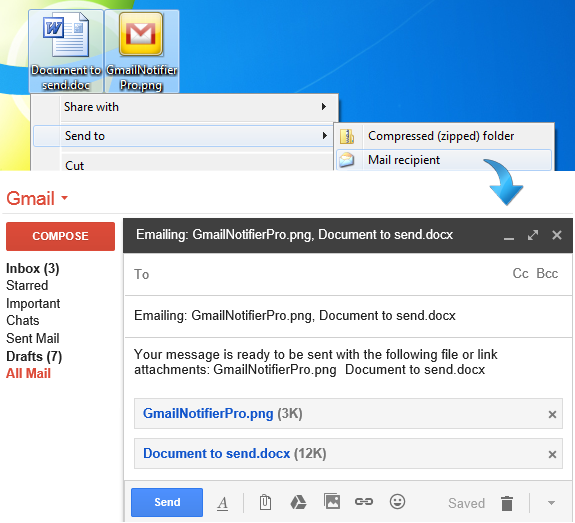
Gmail Notifier Pro can be registered as default program for e-mail in Windows. When registered as default e-mail program in Windows, the task of sending e-mail attachments from Windows, Office or any other applications becomes easy.
The screenshot illustrates the Send To feature that is available for all files and folders in Windows. By selecting one or many files, selecting Send To - Mail recipient, Gmail Notifier Pro Gmail can be opened in the web browser with a new message prepared, including the selected files as attachments. This integration increases the productivity for Gmail users.
Gmail Notifier Pro also have a built-in e-mail composer that can be used for sending messages. The Send To feature can either be used with Gmail in the web browser or the Gmail Notifier Pro composer.
Gmail Notifier Pro also supports mailto-link integration, and can either launch the Gmail composer or the Gmail Notifier Pro composer when a mailto-link is clicked.
Supports 32-bit & 64-bit Windows XP, Windows Vista, Windows 7, Windows 8 and Windows 10.
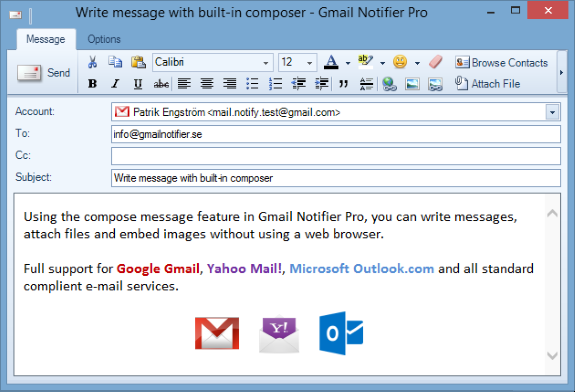
Gmail Notifier Pro can can be used as an e-mail client, with support for all common message operations, including send e-mail, reply, preview and save attachments, mark as read or delete messages.
The screenshot illustrates the e-mail message composer in Gmail Notifier Pro.
Gmail Notifier Pro has preconfigured settings for all major e-mail service providers, making it easy to get started. Gmail Notifier Pro can also be used with any standard IMAP or POP mail server. For Google, messages can be accessed using Atom in addition to IMAP.
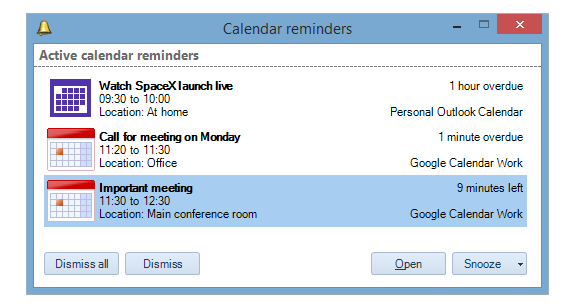
Gmail Notifier Pro can connect to Google Calendar and Microsoft Outlook.com Calendar in order to get information about calendar events and display reminders.
The screenshot illustrates the calendar reminders. These reminders will popup on the Windows desktop to notify about the events.